
Didn’t expect this. Wow! Solana transactions can feel like a fast-moving freight train. My first time watching a block fill up I thought, “Okay, that’s a lot.” Initially I thought the explorer would explain everything, but then I realized that explorers and raw transactions tell two different stories. Actually, wait—let me rephrase that: explorers give you the surface narrative, and the transaction data lets you play detective.
Here’s the thing. Seriously? The speed on Solana is intoxicating. Hmm… because blocks are produced so quickly, transactions land and confirm almost instantly, which is amazing for UX but tricky when you’re debugging a failed transfer or tracing an NFT. My instinct said that if you can read the log lines and inner instructions, you can solve most mysteries. I’m biased, but that deeper layer is where the real info lives.
When you look at a Solana transaction, three quick things pop out: the signatures, the instructions, and the logs. Short list. Signatures prove who signed. Medium detail: instructions are the actions requested by the transaction (transfer, mint, approve). Longer thought: logs are emitted by programs and they reveal runtime behavior, errors, and debug prints, which is often the only way to understand why a complex transaction — like an NFT mint through a custom candy machine or a cross-program invocation — succeeded or failed.
How to approach a transaction step-by-step
Okay, so check this out—step one: find the signature. That’s the unique id. Short and decisive. Next, open the instruction tree. You’ll see a sequence of instructions and which program handled each one. Then read the logs slowly. Logs are sometimes terse, but they almost always tell you if a program panicked or if a compute unit limit was hit. On one hand the UI makes this look tidy, though actually the raw logs can be messy and require patience.
I often use the explorer to pivot from a transaction to the related accounts. (Oh, and by the way…) account state tells you balances, token holdings, and sometimes the owner program. For tokens, check associated token accounts — people forget those and funds appear to vanish. Initially I thought a missing token meant it was burned. But then the token was sitting in an ATA I hadn’t considered; simple human oversight, very very important detail.
Here’s a practical checklist that helps me when I debug: signature → status → fee → instructions → logs → inner instructions → affected accounts. Short and pragmatic. If status is “confirmed” but your dApp shows a different state, check for simultaneous transactions and race conditions. Longer note: Solana’s parallel transaction processing can cause non-intuitive ordering effects, so sequence and account locking matter more than you might think.
Fees deserve a quick aside. Fees are paid in lamports. Small numbers. They’re usually tiny on Solana, but spikes happen — for example when there’s a sudden surge or when a program uses too many compute units. My approach: when fees jump, check the compute unit usage in the logs and whether the transaction retried with a higher priority fee. I’m not 100% sure the mempool behavior is identical across validators, but the explorer gives clues.
Solscan: my go-to for quick, deep dives
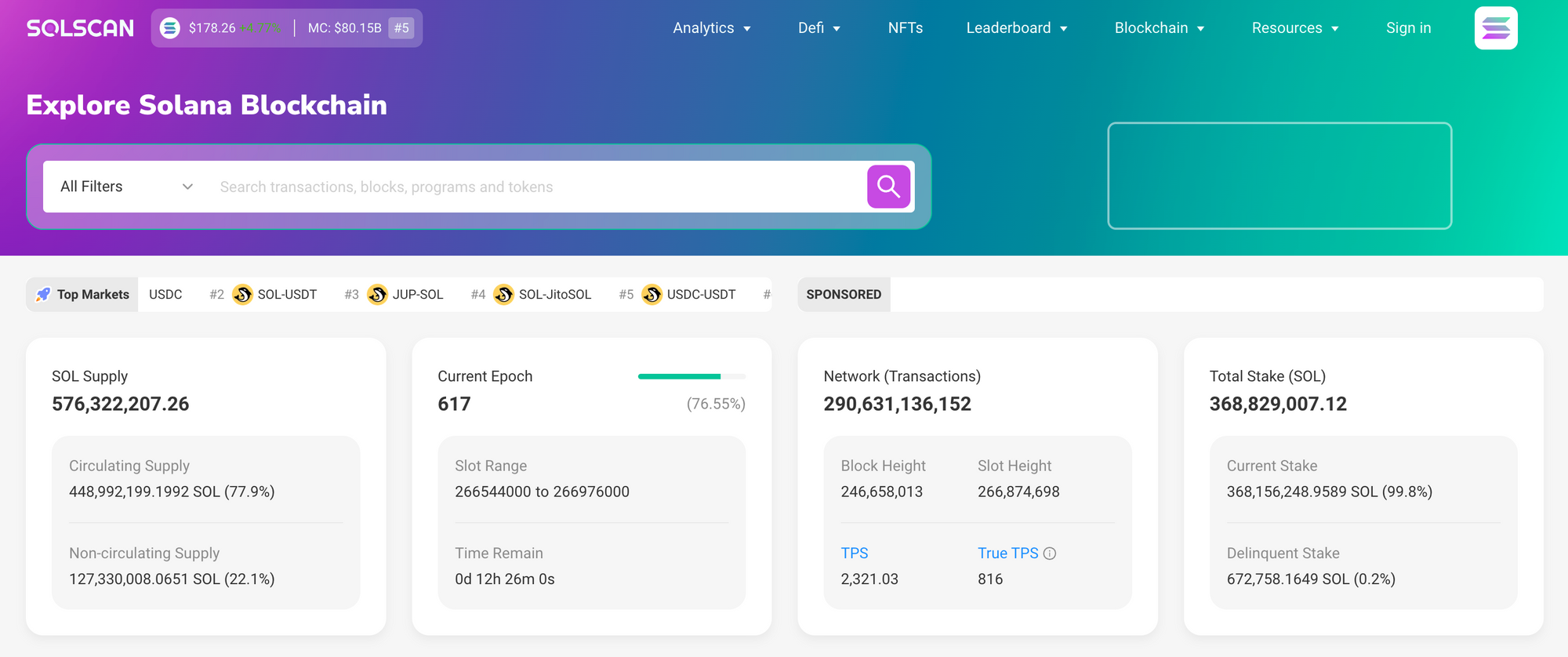
I’ll be honest — I use Solscan a lot. The explorer surface is clean, and the program log section tends to be very readable. When I’m tracking an airdrop, a big swap, or an unusual token transfer I jump to the solscan explorer official site and scan the inner instructions. That link is where I start most of my day, and sometimes I get sucked into a chain of related transactions, tracing funds like a detective in a crime drama.
On Solscan you’ll see tabs for tokens, contracts, and NFT metadata. Short and useful. Medium detail: the explorer often decodes instruction data for common programs (SPL Token, Serum, Metaplex), which saves a lot of guesswork. Long thought: but for bespoke programs or new on-chain logic, you’ll need to translate base58-encoded instruction data or consult the program’s source if it’s published, so expect to go deeper.
One tip I give people at meetups in NYC and SF: copy the transaction signature and paste it into the explorer, then switch to the “Raw” or “JSON” view if available. That view shows you account metas, instruction data, and recent blockhash. If you’re running a local validator or using CLI, you can compare the JSON from the RPC getTransaction call to the explorer output — small discrepancies sometimes point to indexer delays or RPC cache effects.
Something felt off about a transaction I saw last month — duplicate instructions and an odd signer that wasn’t my wallet. Whoa! It turned out to be a delegated authority flow where the program used a PDA to manage funds. Lesson: PDAs (program derived addresses) can look like strange, unaffiliated accounts, but they’re expected behavior for many on-chain programs. If you don’t recognize an account, check if it’s a PDA by looking at the program that owns it and the seed scheme.
Common pitfalls and how to avoid them
Watch for these traps. First: missing ATA. People send tokens to the wrong address without creating an ATA; that token sits but isn’t accessible from typical wallets. Second: wrong mint. NFTs can be minted with similar-looking mint addresses (base58 is long and hard to eyeball). Third: compute limit exceeded. Longer explanation — if your transaction consumes too many compute units, the program will fail mid-execution and sometimes leave partial state changes that look inconsistent.
Debugging tips. Really? Yes. Reproduce on a devnet or localnet. Use simulators. Add logging to your program with msg! or print statements (if you’re writing Rust programs). When diagnosing DEX swaps, inspect the pre- and post-token balances in the inner instructions to understand slippage and route. Also, watch for preflight vs finalized status — preflight checks might pass but the finalization could fail due to concurrent state changes.
I’m biased toward working with transaction logs directly. Logs tell the story. But I also lean on community resources. Forums and Discords often have people who’ve seen the same odd error. (Somethin’ about collective debugging helps.)
FAQ — Real quick answers
Q: How do I tell if a transaction failed and why?
A: Check the transaction status first — it will say failed or success. Short answer: read the program logs. Medium detail: errors like “custom program error: 0x1” mean the program returned an error code; you’ll need the program’s error mapping to decode. Longer tip: look for “Program log: Panicked at” or “compute budget exceeded” strings in the logs to find runtime causes.
Q: My token transfer isn’t showing in my wallet. What now?
A: First, verify the transaction succeeded. Then check the receiver’s associated token account for the mint. If it doesn’t exist, the token may be stuck — the explorer will show the account that received the token, and you’ll likely need to create the ATA or recover via the owner key. I’m not 100% sure every wallet supports manual ATA creation, but many do (or let you import the account).
Q: Can I trust explorer-decoded instruction details?
A: Generally yes for common programs. But for new or custom programs, the explorer might not decode instruction data and will show raw bytes. In that case you either need the ABI/source or decode the bytes with program knowledge. On the plus side, explorers often show which program invoked which, so you can map the logical flow even without decoded params.
So where does this leave you? Take a breath. Read the logs. Use the explorer like a magnifying glass, not just a dashboard. There’s a rhythm to Solana: speed, parallelism, and sometimes inscrutability. That can be frustrating, and honestly it bugs me when people chalk everything up to “blockchain weirdness” instead of doing the legwork. On the other hand, once you learn to interpret inner instructions and PDAs, many mysteries dissolve.
Final thought — and this might sound a bit dramatic — if you want to get good at reading Solana transactions, spend a day following one small token as it moves through multiple programs; trace every signer’s role, the associated token accounts, and the inner instructions. It’s tedious, but it’s effective. You’ll notice patterns, and those patterns will save you time later. Really, it’s like learning to read a city’s map by walking its streets rather than just glancing at it from a plane.