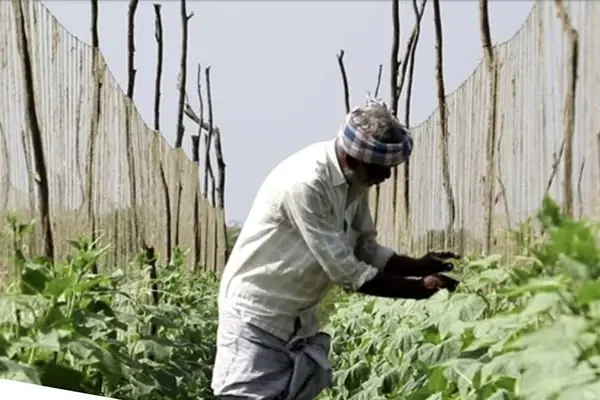
2,000+
Smallholder farmers with an assured market
We buy at agreed prices and supply seed, fertiliser and crop protection, with field visits from our own agri team and timely payments every season.
Grown under contract by 2,000+ smallholder farmers in Karnataka, then processed and packed to your specification for pickle and food brands from the US and Europe to the Middle East and East Asia.
2,000+
contract farmers around Sandur and Kudligi
150+
rural families earning a living with us
70-80%
of our workforce are women
FSSC 22000
food safety certified, with FSSAI and Kosher
About us
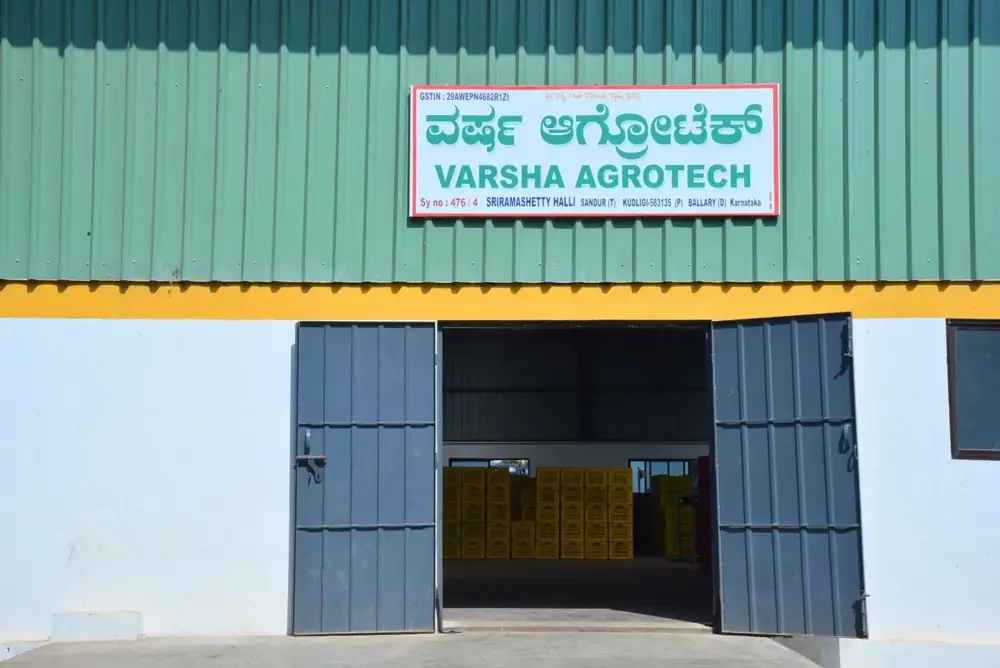
Varsha Agrotech started in Ballari, a district of farming communities with the warm, dry climate gherkins love. We built our processing unit at Sriramasettihalli in Sandur Taluk, close to the contract farmers who grow for us, so fresh fruit reaches the grading line on the day it is picked.
Led by our founder, M. Narasimha, we run every step ourselves: seed and field support, daily harvest, grading, brining and barrelling. Food brands abroad get one accountable partner from the field to the sealed container.
Every barrel can be traced back to the farms and the day it was picked.
Machine grading and hand culling keep every lot true to your specification.
FSSC 22000, FSSAI and Kosher, with a SMETA audit under way.
Assured buying for farmers and on-time wages for our workers.
We run the whole chain ourselves, so every barrel can be traced back to the farms and the day it was picked.
Smallholders grow for us with seed, inputs and guidance from our in-house agri team, on drip irrigation and mulch.
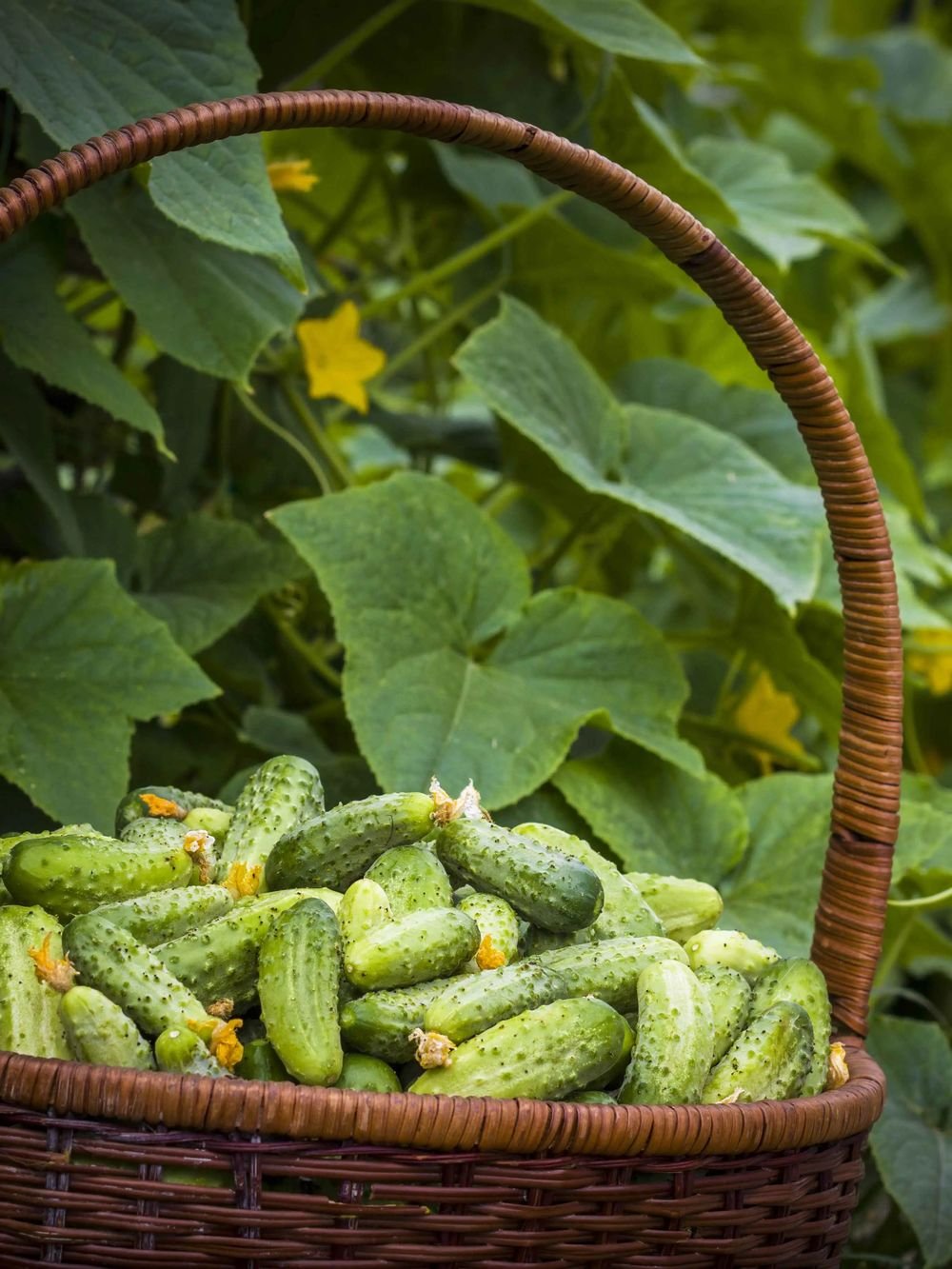
Fruit is picked young and collected from the villages every day, at the peak of freshness.
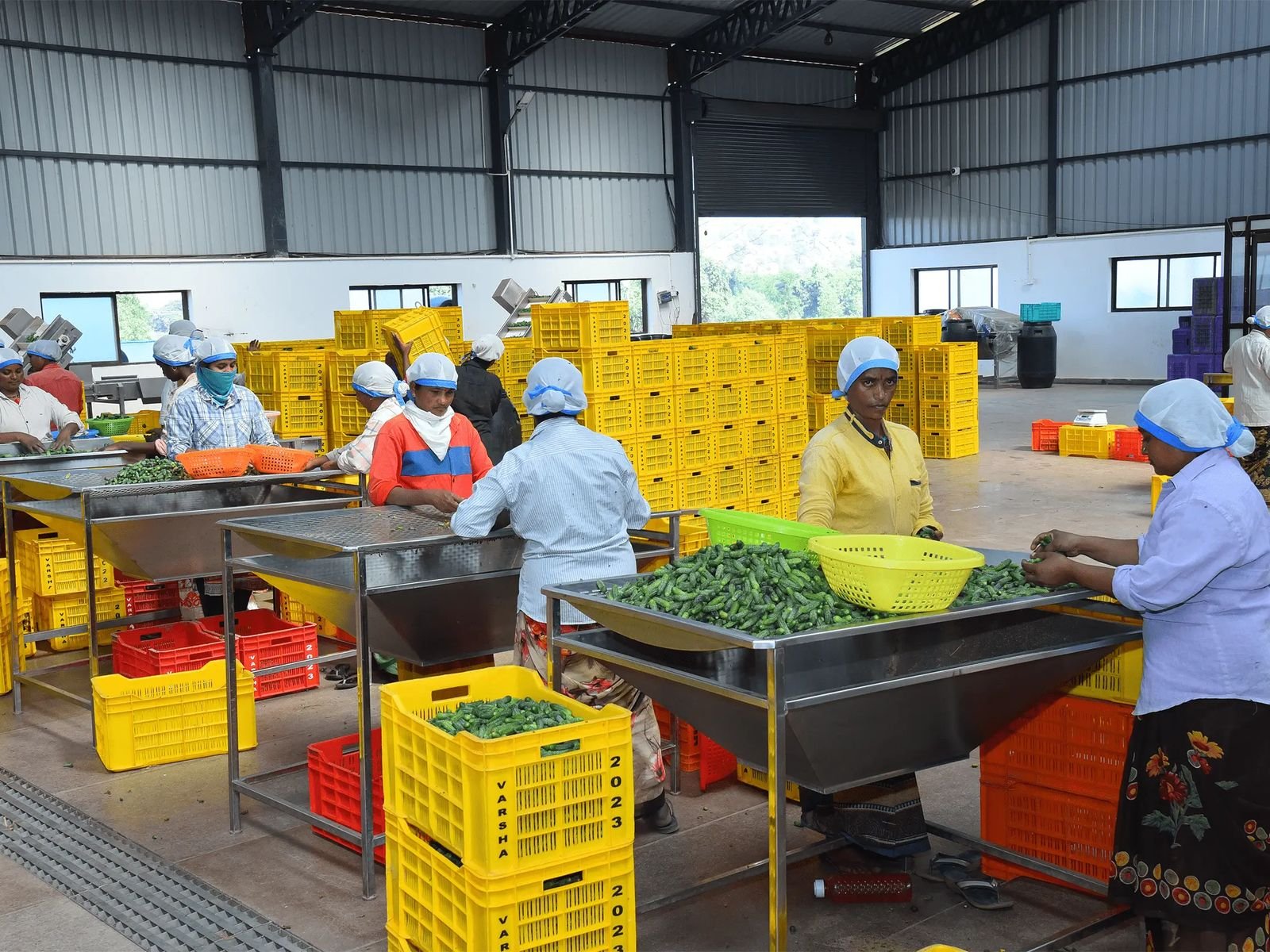
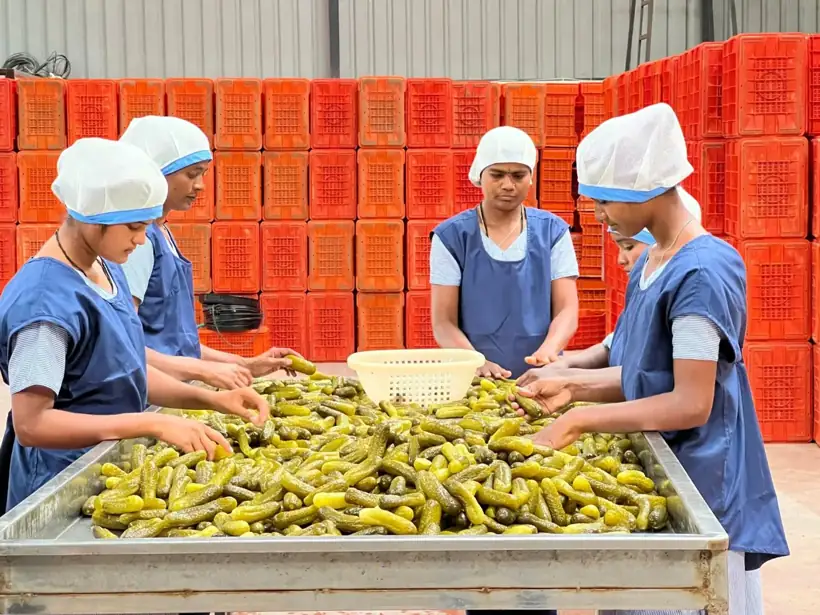
Grading machines sort by size, then our team culls any fruit with defects.
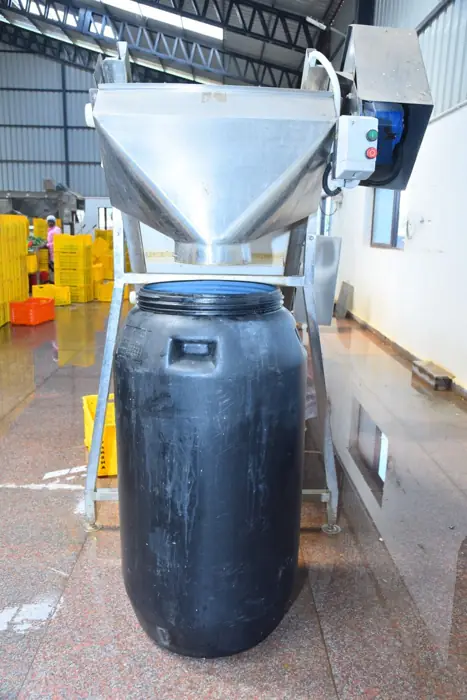
Gherkins are soaked, then machine-washed to remove soil and debris.
Preserved in brine, vinegar or acetic acid, exactly to your product specification.
Packed in 240 or 260 L food-grade HDPE barrels, 80 to a container, palletised on request.
Quality checks at every stage, from the field to the sealed container.

Our impact
Gherkins are grown and packed by hand, so our business only works when our farmers and workers do well. This is what your orders support.
2,000+
We buy at agreed prices and supply seed, fertiliser and crop protection, with field visits from our own agri team and timely payments every season.
70-80%
Most of the people who grade, wash and pack your gherkins are women hired directly from the villages around our unit, paid on time through wage registers, with no labour contractors in between.
150+
Ballari is a dry district, so we bring drip irrigation and plastic mulching to our contract farms. They save water, keep weeds down and give the even, export-grade fruit our buyers ask for.
Our work supports the UN Sustainable Development Goals
FSSC 22000
Global food safety system certification for our processing unit.
FSSAI
Licensed food business under India's food safety regulator.
Kosher
Kosher certified product for buyers who need it.
SMETA
Ethical-trade audit under way for our European retail customers.
Full containers from our unit in Karnataka, with the certificates and documents your market asks for.
We are adding allied crops on the same contract-farming base, and a jar and bottling line for ready-to-sell packs. Talk to us now about early supply.
Ask about early supplyOne container holds 80 barrels of 240 or 260 L. Ask us about smaller trial lots for a first order.
All grades. We grade by length, from 1-4 cm cornichons through 3-6, 4-7 and 6-9 cm up to 9-12 cm, or by count per kg in the standard bands from 300+ down to 5/15. Custom bands are fine too.
All three: brine, vinegar and acetic acid, prepared to the salt and acidity on your product sheet.
Yes. Tell us your grade and media and we will send a sample lot for your quality team.
We process nearly year-round. Share your shipment window early and we plan sowing with our contract farmers to match it.
FSSC 22000, FSSAI and Kosher certificates are available on request. Our SMETA ethical-trade audit is in progress.
Talk to us
Tell us your grade, media and volumes. We reply with pricing and shipment windows.
We ship to the US and Canada, Russia and the CIS, the Netherlands, Poland and the rest of Europe, the Middle East, Egypt, Chile, South Korea and China.
Talk to our founder, M. Narasimha, about long-term supply.